





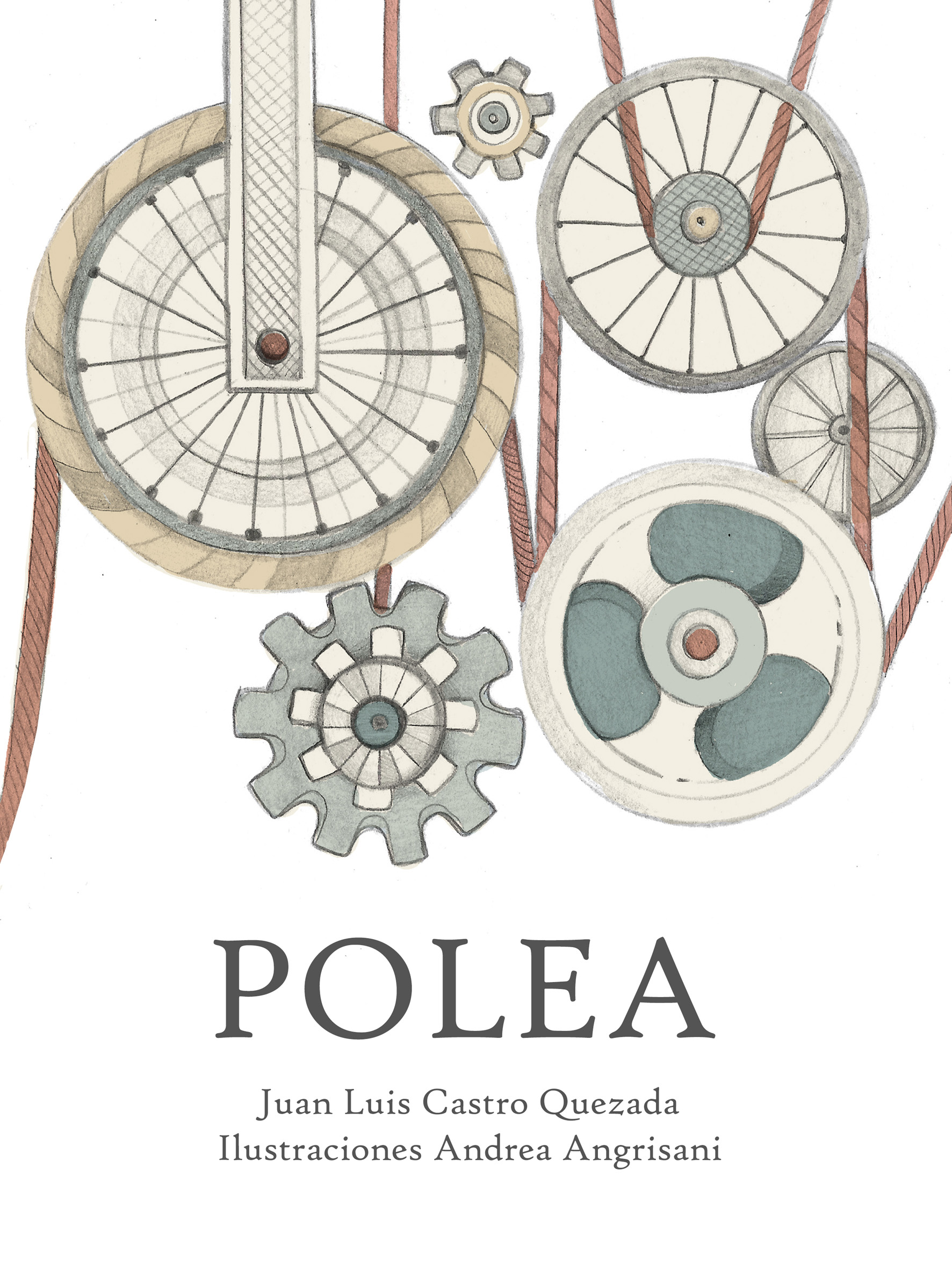
POLEA

Argentina has an economic support program for translations for those publishers that purchase rights to books by Argentine authors. Click here for more information.
Original title: Polea
Original title: P
Writer: Juan Luis Castro
Illustrator: Andrea Angrisani
Original Publication: Unpublished in progress
Format: 12 color pages
Rights details: Worldwide right available
About the book:
Lo que comenzó como un problema doméstico —la imposibilidad de subir una robusta parrilla tipo tambor a una terraza en un segundo piso— termina transformando la vida de Emiliano Lagarto. Tras diseñar un ingenioso sistema de poleas con llantas de bicicleta, Emiliano no solo logra su cometido original, sino que descubre una fascinante forma de interactuar con el mundo.
Emiliano comienza a subirlo todo: desde las compras del supermercado y muebles, hasta personas, animales y objetos disparatados que encuentra en la vereda.
El cuento muestra como una solución ingeniosa puede desviarnos de nuestro propósito original hasta convertir la herramienta en el fin mismo de nuestra existencia.
Más allá de su narrativa, el corazón de la historia está elaborado con una cadencia rítmica específica que funciona como una poderosa herramienta educativa. Este flujo rítmico fomenta el desarrollo de la conciencia fonológica en los niños pequeños: la capacidad de reconocer y manipular las partes habladas de las frases y las palabrasWhat began as a domestic dilemma—the impossibility of hauling a sturdy drum-style grill up to a second-floor terrace—ended up transforming Emiliano Lagarto’s life. After designing an ingenious pulley system using bicycle rims, Emiliano not only achieved his original goal but discovered a fascinating new way to interact with the world.
Emiliano began hoisting everything: from groceries and furniture to people, animals, and the absurd objects he found discarded on the sidewalk. Eventually, he turned his terrace into a picturesque aerial flea market of curiosities.
The story illustrates how an ingenious solution can veer us away from our original purpose until the tool itself becomes the very end of our existence.
Beyond its narrative, the story is crafted with a specific rhythmic cadence that serves as a powerful educational tool. This rhythmic flow encourages the development of phonological awareness in young children—the ability to recognize and manipulate the spoken parts of sentences and words.